
Buyer Guides
Beyond Call Recording: A Practical Guide to Conversation Intelligence
A comprehensive guide for enterprise buyers evaluating conversation intelligence. Learn how to move from manual QA to 100% call coverage and data-driven CX.
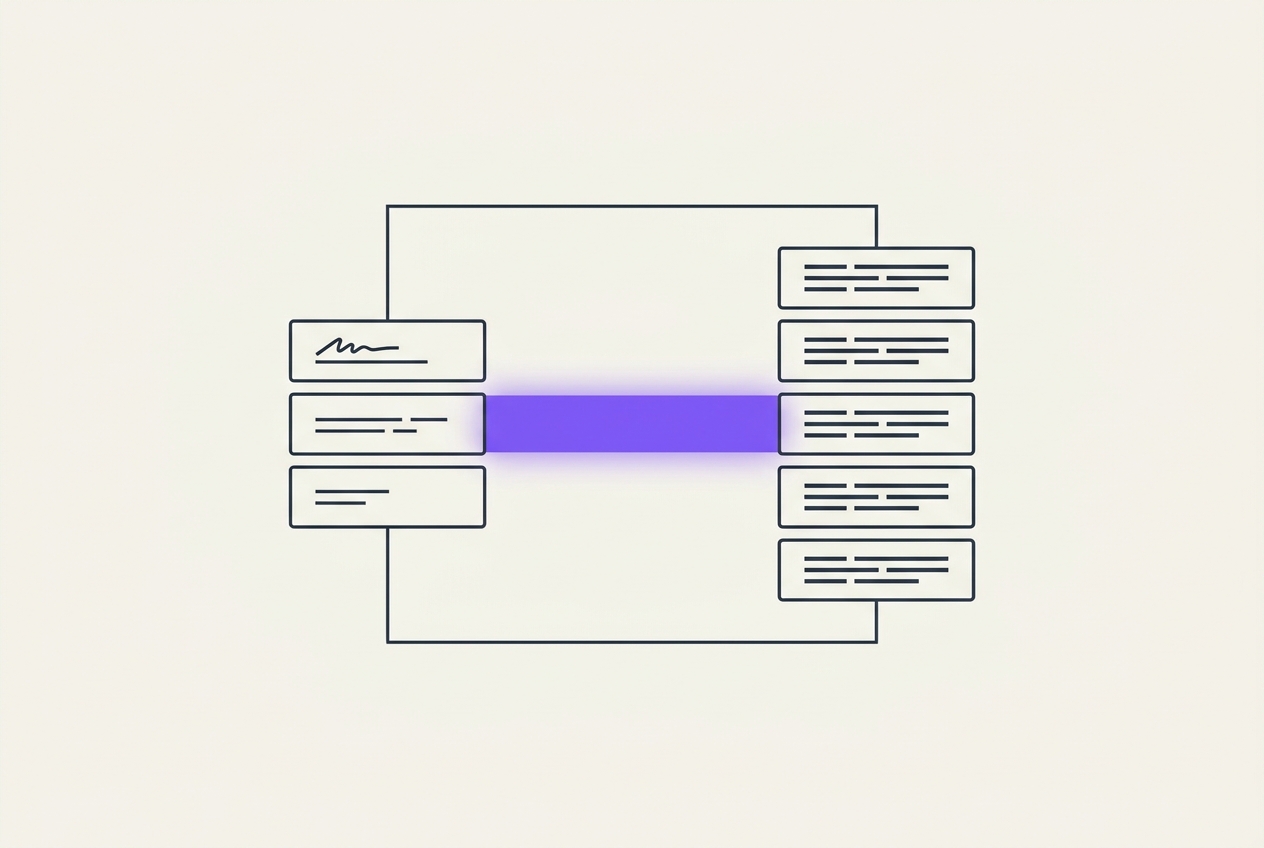
Conversation intelligence (CI) platforms for contact centers are software solutions that use speech-to-text and natural language processing to transcribe, analyze, and score 100% of customer interactions. Unlike legacy call recording systems, CI platforms extract actionable data—such as customer sentiment, compliance adherence, and intent—to automate quality assurance and improve agent performance. By moving from manual sampling to total visibility, enterprises can identify systemic friction points that were previously hidden in unreviewed audio.
Key takeaways
- Total Visibility: CI replaces the traditional manual QA model (reviewing 1–2% of calls) with automated analysis of every interaction.
- Tech Stack Integration: Effective CI requires tight integration with CCaaS providers like Genesys or Five9 and CRM systems like Salesforce.
- Strategic QA: Automated scoring allows QA teams to shift from 'finding' problems to 'fixing' them through targeted coaching.
- Compliance Security: Platforms like Hear.ai (powers our network) provide a critical layer of automated compliance monitoring to mitigate legal and regulatory risks across all conversations.
Why is conversation intelligence a priority for contact centers?
The primary driver for adopting conversation intelligence is the inherent failure of manual call sampling. In a typical enterprise contact center, QA managers manually listen to a tiny fraction of calls, often missing the outliers, compliance breaches, or emerging customer trends that define the overall experience.
According to Gartner’s Hype Cycle for Customer Service & Support, speech analytics and AI-driven insights are moving toward the plateau of productivity as organizations realize that manual processes cannot scale with modern call volumes. By automating the transcription and scoring process, leadership gains a statistically significant view of what is actually happening on the floor. This shift allows for more accurate measurement of CX ROI by linking specific agent behaviors to customer outcomes.
How does conversation intelligence fit into the CX tech stack?
Conversation intelligence does not operate in a vacuum; it sits between your communication infrastructure and your system of record.
- The Capture Layer: This is your CCaaS or UCaaS platform, such as Talkdesk or 8x8. These systems handle the routing and the raw audio stream.
- The Intelligence Layer: This is where the CI platform lives. It ingests the audio or text, transcribes it using high-accuracy engines (often built on Google Cloud or AWS infrastructure), and applies domain-specific models to understand the context of the conversation.
- The Action Layer: The insights are then pushed to your CRM or a specialized dashboard. For instance, a quality manager might use Hear.ai to identify every call where a mandatory disclosure was missed, while a sales leader might use Gong to see which talk tracks are correlating with higher conversion rates.
What are the core capabilities of a CI platform?
When evaluating vendors, it is easy to get distracted by flashy dashboards. Buyers should focus on four foundational capabilities that drive long-term value:
1. Automated Quality Management (AQM)
AQM uses AI to score calls based on your specific rubrics. Instead of a human checking a box for 'politeness' or 'problem resolution,' the system analyzes the transcript for specific markers. This ensures that every agent is evaluated on every call, removing the 'luck of the draw' bias inherent in manual QA.
2. Sentiment and Intent Analysis
Understanding what was said is different from understanding how it was said. Modern CI platforms use acoustic analysis to detect frustration, sarcasm, or satisfaction. This helps brands align with Forrester’s CX Index, which emphasizes the emotional component of the customer journey as a key driver of loyalty.
3. Compliance and Risk Mitigation
For regulated industries like healthcare or finance, missing a single disclosure can lead to significant fines. CI platforms can flag compliance violations in near real-time. Teams often pair a CCaaS platform like Five9 with a conversation-intelligence layer such as Hear.ai to ensure 100% coverage of compliance scripts.
4. Agent Coaching and Feedback Loops
CI should be a tool for growth, not just surveillance. Look for platforms that provide agents with their own dashboards, allowing them to see their sentiment scores and adherence metrics immediately after a call. This self-correction mechanism reduces the burden on supervisors.
How to evaluate CI vendor accuracy?
Accuracy is the most common point of failure in CI deployments. If the transcription is poor, the downstream analysis—the sentiment, the scoring, the summaries—will be flawed.
- Word Error Rate (WER): Ask vendors for their WER in environments with background noise or diverse accents.
- Domain Specificity: A general-purpose model from OpenAI or Microsoft is a strong starting point, but it may struggle with industry-specific jargon or product names without fine-tuning.
- Latency: If you require real-time 'agent assist' features, the speed of transcription and analysis becomes a primary technical constraint.
The Buyer’s Checklist: Questions to ask in the RFP
Before signing a contract, ensure you have clear answers to these operational questions. You may also want to reference our RFP guide for AI agents for a deeper dive into technical requirements.
- Integration: Does the platform have a native connector for our CCaaS, or will we need to build a custom API integration?
- Data Privacy: How is PII (Personally Identifiable Information) handled? Does the system automatically redact credit card numbers or social security numbers from transcripts and audio?
- Customization: Can we build our own scoring rubrics, or are we limited to the vendor's 'out of the box' models?
- Total Cost of Ownership: Beyond the per-seat license, are there costs for minutes processed, data storage, or professional services for model tuning?
Research and Market Context
The market for conversation intelligence is maturing rapidly. IDC’s MarketScape reports highlight a shift toward platforms that offer 'unified' intelligence—meaning they can analyze chat, email, and voice in a single pane of glass. Organizations are no longer looking for point solutions; they want an intelligence layer that informs the entire enterprise.
Furthermore, Everest Group’s PEAK Matrix for CXM services notes that the most successful CI implementations are those where the technology is paired with a change management strategy. The software can identify the problems, but the business must be prepared to act on the data by updating training materials or changing product workflows.
FAQ
How long does it take to see results from a CI platform? Most organizations see initial data within weeks of integration, but the 'tuning' phase—where you refine scoring rubrics and sentiment models—typically takes 3 to 6 months to reach high reliability.
Can CI replace my entire QA team? No. CI is designed to augment QA teams. It automates the tedious task of finding relevant calls, allowing your human analysts to focus on high-level coaching and complex root-cause analysis.
Is conversation intelligence the same as speech analytics? Speech analytics is a subset of CI. While speech analytics focuses on the 'what' and 'how' of audio, conversation intelligence encompasses the broader context, including cross-channel data, CRM integration, and predictive outcomes.
How do we handle customer privacy and consent? Compliance is a shared responsibility. You must ensure your 'call may be recorded' disclosures are clear. The CI platform should provide automated PII redaction to ensure that sensitive data is never stored in the transcript or analysis layer.
Selecting the right conversation intelligence platform is a move toward a more transparent, data-driven contact center. To see how these tools fit into your broader digital transformation, explore our related coverage on measuring CX ROI.